For cyclists seeking to elevate their riding experience without investing in a completely new electric bicycle, conversion kits offer a practical and customizable solution. The ZYXU Electric Bike Conversion Kit stands out as a versatile option designed to transform standard bicycles into efficient electric-assisted machines. This comprehensive review explores the kit’s technical specifications, installation process, real-world performance, and user experiences to provide a balanced perspective for riders considering this upgrade.
Technical Overview
At the core of the ZYXU conversion kit is a brushless, gearless hub motor available in 36V or 48V configurations with a 350W power output. This motor supports wheel sizes ranging from compact 16-inch models to larger 700C rims, making it compatible with folding bikes, commuter bicycles, and hybrid frames. The hub motor’s gearless design prioritizes simplicity and durability, minimizing maintenance requirements while delivering a maximum assisted speed of 25–28 km/h (15–17 mph). The kit includes a waterproof controller, an LED display, thumb throttle, electronic brake levers, and a pedal assist system (PAS) sensor, ensuring riders have multiple input options for power delivery.
Constructed from lightweight aluminum alloy and stainless steel components, the motor and accessories strike a balance between strength and weight savings. The linear-pull brake compatibility ensures seamless integration with most modern bicycle brake systems, though users should verify axle width and fork/dropout dimensions before installation.
Installation Insights
One of the kit’s most praised features is its user-friendly installation process. Multiple users reported completing the conversion in under two hours with basic tools, though some scenarios required professional assistance. A common modification involved spreading front forks by 5–10mm to accommodate the hub motor’s 100mm axle width. Riders with older bicycles noted the need to file 8mm dropout slots to 10mm for proper axle seating—a task easily handled by local bike shops for those uncomfortable with metalwork.
The plug-and-play wiring system received consistent praise, with color-coded connectors simplifying controller integration. However, a minority of users highlighted the importance of purchasing compatible battery connectors separately, as the kit’s Anderson-style terminals may not match all third-party batteries. The PAS sensor installation proved intuitive for most, though one user achieved better results by mounting the sensor on the non-drive side crankset, contrary to instructions, demonstrating the system’s adaptability.
Performance Analysis
In real-world testing, the 350W motor delivers adequate torque for urban commuting and moderate hills, particularly when paired with the 48V configuration. Riders transitioning from pedal-only bicycles appreciated the immediate power boost from the thumb throttle, which proves invaluable for accelerating from stops or navigating traffic. The PAS system’s responsiveness stood out, with the magnetic cadence sensor providing smooth assistance proportional to pedaling effort across five adjustable levels.
Range performance varies significantly based on battery capacity and terrain. Users employing dual 6S LiPo RC batteries (44.4V nominal) reported 15–20 miles of mixed-use riding, while those with purpose-built 48V 10Ah packs achieved 25–30 miles. The gearless motor’s quiet operation and minimal vibration enhance riding comfort, though some noted a slight drag sensation when pedaling without assistance—a common trait among direct-drive hub motors.
User Experiences & Adaptability
The kit’s versatility shines in diverse use cases. A folding bike owner transformed their 16-inch-wheeled commuter into a campground exploration vehicle, citing the motor’s ability to maintain 15 mph on packed gravel paths without excessive battery drain. Another user successfully adapted the system to a recumbent bicycle, praising the controller’s compatibility with unconventional frame geometries.
Several riders compared the converted bikes favorably to pre-built electric models, noting equivalent performance at a fraction of the cost. The ability to retain original components like drivetrains and suspension systems proved particularly appealing to cyclists with high-end bicycles seeking electrification without compromising their existing setup.
Technical Considerations
Prospective users should note two critical compatibility factors: First, the hub motor’s 100mm axle width may require fork modification for bicycles designed for narrower hubs. Second, the controller’s 22A maximum current demands a battery capable of sustaining high discharge rates—a detail overlooked by some users experiencing premature voltage sag.
The included brake levers with motor cutoff switches function reliably but may feel bulky compared to hydraulic systems. Riders prioritizing ergonomics might consider integrating aftermarket levers with compatible cutoff mechanisms.
Maintenance & Support
Long-term reliability reports remain limited due to the product’s relatively recent market introduction. However, early adopters report trouble-free operation after 6–8 months of regular use, with occasional spoke tension adjustments being the only maintenance required. A small percentage of users encountered controller issues, though these instances appeared isolated and were resolved through warranty replacement or third-party part sourcing.
Comparative Advantages
When measured against competing kits, the ZYXU system distinguishes itself through:
- Wheel Size Flexibility: Unlike many kits limited to 26-inch or larger wheels, the 16-inch compatibility caters to folding bike enthusiasts.
- Dual Voltage Operation: The ability to run on 36V or 48V systems provides flexibility in battery selection and performance tuning.
- Waterproof Wiring: Fully insulated connectors and sealed controller housing outperform many entry-level kits in wet weather resilience.
-
Regenerative Braking Capability: Though not explicitly marketed, the controller supports regenerative braking when using compatible batteries.
Improvement Opportunities
While generally well-received, the kit could benefit from:- Expanded documentation covering unconventional installations
- Optional torque arm inclusion for high-stress applications
- Wider connector compatibility for popular battery types
Environmental Impact Perspective
By enabling the electrification of existing bicycles, the kit aligns with sustainable transportation trends. Users reported repurposing decade-old bikes into functional e-commuters, diverting frames from landfills while reducing automotive dependence for short urban trips.Conclusion
The ZYXU Electric Bike Conversion Kit emerges as a compelling option for cyclists seeking affordable electrification without sacrificing their preferred bicycle’s handling characteristics. Its combination of adaptable wheel sizing, dual-voltage operation, and comprehensive accessory package makes it particularly suitable for tinkerers and folding bike enthusiasts. While requiring basic mechanical aptitude for installation, the system rewards effort with reliable performance comparable to factory-built electric bicycles.
For those willing to verify frame compatibility and potentially source complementary components like battery connectors, this kit represents a gateway to customized electric mobility. Its balance of power delivery and energy efficiency positions it as a practical solution for commuters, recreational riders, and anyone seeking to extend their cycling range without abandoning their trusted two-wheeled companion.
ASIN: B092ZT1NV6
![[Ultra-Secure] With our uniquely designed bike phone holder mount, whether navigating bumpy roads or high-speed roads, your phone remains securely fastened to the handlebar. Its all-round shape firmly secures each corner of your phone, providing exce...](https://m.media-amazon.com/images/I/41FJGrZQ5ML._SL160_.jpg)
![LISEN Bike Phone Holder, [Super Easy Install] Ultra Stable Motorcycle Phone Mount, Bicycle Handlebar Holder Mount for Adults Kids, Bike Bicycle Ebike Gear Accessories, for iPhone Samsung Google Pixel #1](https://m.media-amazon.com/images/I/41Y-Dc1EMSL._SL100_.jpg)
![LISEN Bike Phone Holder, [Super Easy Install] Ultra Stable Motorcycle Phone Mount, Bicycle Handlebar Holder Mount for Adults Kids, Bike Bicycle Ebike Gear Accessories, for iPhone Samsung Google Pixel #2](https://m.media-amazon.com/images/I/41Uqq41uHYL._SL100_.jpg)
![LISEN Bike Phone Holder, [Super Easy Install] Ultra Stable Motorcycle Phone Mount, Bicycle Handlebar Holder Mount for Adults Kids, Bike Bicycle Ebike Gear Accessories, for iPhone Samsung Google Pixel #3](https://m.media-amazon.com/images/I/41TlXUbNWiL._SL100_.jpg)
![LISEN Bike Phone Holder, [Super Easy Install] Ultra Stable Motorcycle Phone Mount, Bicycle Handlebar Holder Mount for Adults Kids, Bike Bicycle Ebike Gear Accessories, for iPhone Samsung Google Pixel #4](https://m.media-amazon.com/images/I/41T5Hl0SJyL._SL100_.jpg)
![LISEN Bike Phone Holder, [Super Easy Install] Ultra Stable Motorcycle Phone Mount, Bicycle Handlebar Holder Mount for Adults Kids, Bike Bicycle Ebike Gear Accessories, for iPhone Samsung Google Pixel #5](https://m.media-amazon.com/images/I/41HVg2G5E7L._SL100_.jpg)
LISEN Bike Phone Holder, [Super Easy Install] Ultra Stable Motorcycle Phone Mount, Bicycle Handlebar Holder Mount for Adults Kids, Bike Bicycle Ebike Gear Accessories, for iPhone Samsung Google Pixel
25% Off

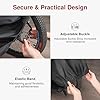


Puroma Bike Cover for 1 bike, 190T Outdoor Waterproof Bicycle Covers Rain Sun UV Dust Wind Proof with Lock Hole for Mountain Road Electric Bike (Basic Black)
28% Off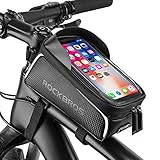


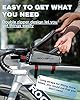
ROCKBROS Bike/Bicycle Phone Front Frame Bag, Waterproof, Tube Bag,Cycling Pouch, Bike Accessories for Men Compatible Phone Under 7”
10% Off
![ANCHEER Electric Bike for Adults with 500W Motor[Peak 750W], 48V 499Wh Ebike, Up to 55 Miles, 3H Fast Charge, 26'' Gladiator Electric Mountain Bike, LCD Display, 21Speed, 22MPH Adults Electric Bicycle #1](https://m.media-amazon.com/images/I/41-wuGcBT0L._SL100_.jpg)
![ANCHEER Electric Bike for Adults with 500W Motor[Peak 750W], 48V 499Wh Ebike, Up to 55 Miles, 3H Fast Charge, 26'' Gladiator Electric Mountain Bike, LCD Display, 21Speed, 22MPH Adults Electric Bicycle #2](https://m.media-amazon.com/images/I/51q26r+Vq2L._SL100_.jpg)
![ANCHEER Electric Bike for Adults with 500W Motor[Peak 750W], 48V 499Wh Ebike, Up to 55 Miles, 3H Fast Charge, 26'' Gladiator Electric Mountain Bike, LCD Display, 21Speed, 22MPH Adults Electric Bicycle #3](https://m.media-amazon.com/images/I/41hqJRkbHqL._SL100_.jpg)
![ANCHEER Electric Bike for Adults with 500W Motor[Peak 750W], 48V 499Wh Ebike, Up to 55 Miles, 3H Fast Charge, 26'' Gladiator Electric Mountain Bike, LCD Display, 21Speed, 22MPH Adults Electric Bicycle #4](https://m.media-amazon.com/images/I/51ZVUhFoOWL._SL100_.jpg)
![ANCHEER Electric Bike for Adults with 500W Motor[Peak 750W], 48V 499Wh Ebike, Up to 55 Miles, 3H Fast Charge, 26'' Gladiator Electric Mountain Bike, LCD Display, 21Speed, 22MPH Adults Electric Bicycle #5](https://m.media-amazon.com/images/I/51sksNRqQ4L._SL100_.jpg)
ANCHEER Electric Bike for Adults with 500W Motor[Peak 750W], 48V 499Wh Ebike, Up to 55 Miles, 3H Fast Charge, 26'' Gladiator Electric Mountain Bike, LCD Display, 21Speed, 22MPH Adults Electric Bicycle
$239.99 (as of July 5, 2025 16:22 GMT +00:00 - More infoProduct prices and availability are accurate as of the date/time indicated and are subject to change. Any price and availability information displayed on [relevant Amazon Site(s), as applicable] at the time of purchase will apply to the purchase of this product.)


Gotrax NEPHELE 16" Folding Electric Bike, Max Range 28Miles(Pedal-assist) &15.5Mph Power by 350W Motor, Front Suspension&Adjustable Seat and Handlebar, Commuter Electric Bicycle for Adults/Teens Black
$550.00 (as of July 5, 2025 16:00 GMT +00:00 - More infoProduct prices and availability are accurate as of the date/time indicated and are subject to change. Any price and availability information displayed on [relevant Amazon Site(s), as applicable] at the time of purchase will apply to the purchase of this product.)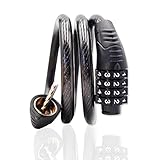
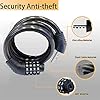


Combination Bike Cable Lock - 4 Digit, 32 inch Long Coiled Security Resettable Cable Lock, Anti-Theft Accessories for Mountain Bike, Road Bike, Electric Bicycle, Scooter
$6.99 (as of July 5, 2025 16:27 GMT +00:00 - More infoProduct prices and availability are accurate as of the date/time indicated and are subject to change. Any price and availability information displayed on [relevant Amazon Site(s), as applicable] at the time of purchase will apply to the purchase of this product.)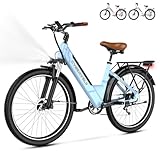


Cybervelo 1000 Peak Electric Bike for Adults,up 80 Miles Removable Battery Ebike, 26" Electric Mountain E Bike with 7-Speed,Adult Electric Bicycles for Commute Beach Snow
8% Off




Loxan 2 Pack 14x2.125 Bike Inner Tubes Compatible with Jetson and Gotrax Electric Scooters, 14 x 2.125 inch Replacement Bicycle Tubes with Angled Valve Stem for Electric Bike, E-Bike and 14-Inch Bike
21% Off



GPUTEK Mini Bike Tire Air Pump: Fast Inflate Portable Small Bicycle Electric Pump for Presta and Schrader Valves, 120 Psi High Pressure Pump with Digital Gauge for Road Bike, Mountain Bike, E-Bike
12% Off