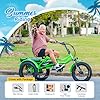
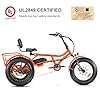
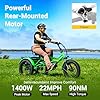
For riders seeking a stable, powerful, and adaptive electric trike designed to conquer diverse terrain while prioritizing accessibility, the ADDMOTOR TRIKETAN M-330 Electric Trike emerges as a compelling solution. Built around a 750W rear-mounted motor, a UL-certified 960Wh battery, and innovative stability-focused engineering, this three-wheeled e-trike blends utility with thoughtful design elements for adult riders of varying mobility needs. Below, we explore its performance, real-world applications, and how its features address common challenges faced by riders transitioning to electric trikes.
Powertrain and Performance
At the heart of the TRIKETAN M-330 lies a 750W rear hub motor optimized for torque delivery rather than outright speed. This configuration ensures smooth acceleration from a standstill, particularly useful for riders carrying cargo or navigating inclined surfaces. The motor’s placement at the rear axle contributes to balanced weight distribution, a critical factor in maintaining stability during starts and stops. Users frequently highlight the trike’s ability to handle steep grades without wheel slippage, attributing this to the motor’s torque-focused tuning and the traction provided by 4-inch-wide fat tires.
The 48V 20Ah lithium battery provides a maximum claimed range of 85 miles in pedal-assist mode (PAS), though real-world usage suggests 40-60 miles depending on terrain, rider weight, and assist level selection. A USB charging port integrated into the display allows riders to power devices during commutes or recreational rides, adding practicality for those using navigation apps or requiring emergency phone charging. Charging times average 6-8 hours for a full replenishment, with the removable battery design simplifying storage and security.
Stability Engineering: Differential System and Fat Tire Advantage
ADDMOTOR’s implementation of a rear differential sets this trike apart from competitors. Unlike single-axle designs that force both rear wheels to rotate at identical speeds, the differential permits independent wheel rotation during turns. This eliminates the “wheel hop” sensation common in rigid-axle trikes when cornering, creating a more car-like steering experience. Riders recovering from balance-related health challenges specifically appreciate this feature, noting increased confidence when navigating curving bike paths or urban intersections.
Complementing the differential are 16×4-inch fat tires that absorb road imperfections while providing a substantial contact patch. The tires perform admirably on loose surfaces like gravel and sand, with several users reporting successful use on packed snow (though ice-specific traction would require studded tires). Fenders come standard, a practical addition for commuters or riders in wet climates. The trike’s 101.4-pound weight and 45-inch wheelbase contribute to planted handling, though the weight necessitates careful planning when maneuvering in tight spaces or loading into vehicles.
3rd Generation Torque Sensor: Natural Pedal Feedback
ADDMOTOR’s mid-axis torque sensor represents a significant upgrade from cadence-based pedal assist systems. By measuring actual force applied to the pedals rather than mere rotation, the trike delivers proportional power assistance that mimics natural cycling dynamics. Riders transitioning from traditional bicycles find this system intuitive, with one noting, “It feels like having a constant tailwind rather than an abrupt push.” The system’s responsiveness shines during hill climbs, where incremental pressure adjustments yield immediate assist adjustments without lag.
Seven-speed Shimano gearing allows fine-tuning of effort levels, particularly useful when conserving battery on flat terrain or combining human and electric power for steep ascents. The thumb shifter placement receives praise for ergonomic accessibility, though some suggest adding grip tape to the pedals for enhanced foot security during high-torque starts.
Accessibility and Adaptive Features
Designed with a low-step aluminum frame and adjustable seat (26-34 inches), the M-330 accommodates riders from 5’0” to 6’2”. The 450-pound payload capacity supports adaptive accessories like baskets, oxygen carriers, or medical equipment mounts. A common theme among users is the trike’s role in restoring mobility independence—several mention using it for grocery runs, physiotherapy sessions, or accompanying family on recreational rides where a standard bicycle would be unstable.
The parking brake system, activated via a handlebar-mounted lever, addresses a frequent concern in trike designs. By locking the rear wheels when engaged, it prevents rollaways on slopes—a vital feature given the trike’s weight. Some early adopters suggested adding a visual indicator for brake engagement status, which ADDMOTOR appears to have addressed in later production runs.
User Experiences and Practical Considerations
Assembly experiences vary, with technically inclined users completing setup in 1-2 hours while others recommend professional assembly due to the differential system’s complexity. The inclusion of a toolkit and floor pump simplifies initial preparation, though first-time owners advise checking spoke tension and brake alignment post-assembly.
Riders emphasize the importance of practicing low-speed turns to adapt to the trike’s handling characteristics. While the differential reduces understeer, the wide rear track requires slightly wider arcs than a bicycle. Multiple users report adapting within 2-3 rides, with one stating, “After a few practice laps around the parking lot, it became second nature.”
The inclusion of reflective rim stickers and a bright LED taillight enhances visibility for dawn/dusk riders. Some have added aftermarket turn signals or flags for increased conspicuity in traffic. Commuters appreciate the rear rack’s utility, though ADDMOTOR offers proprietary panniers and baskets for integrated cargo solutions.
Terrain Versatility and Seasonal Use
Fat tires and a rigid front suspension fork (with 50mm travel) make the M-330 adaptable beyond paved surfaces. Users successfully navigate hard-packed trails, boardwalks, and snowy conditions, though deep mud or soft sand may require reduced tire pressure. The trike’s weight and stability prove advantageous in windy conditions, with several coastal riders noting its resistance to crosswinds compared to lighter e-bikes.
Cold-weather performance sees minimal battery degradation at temperatures above 20°F (-6°C), though storage in heated spaces is recommended. The mechanical disc brakes provide consistent stopping power across temperatures, with users in rainy climates advising periodic pad inspections to combat grit accumulation.
Comparative Advantages in the E-Trike Market
The TRIKETAN M-330 distinguishes itself through its torque-sensing pedal assist, a feature often reserved for premium-priced models. Competing trikes in similar power categories frequently rely on cadence sensors, which can deliver jerky or delayed power engagement. The differential system also positions ADDMOTOR ahead of brands using solid rear axles, particularly for buyers prioritizing cornering stability.
While some users initially desire a parking brake on earlier models, the current iteration includes this feature, addressing a common critique. The trike’s mini configuration (shorter wheelbase vs. standard trikes) enhances maneuverability in urban environments without sacrificing load capacity—a balance rarely achieved in adult-sized e-trikes.
Areas for Consideration
Prospective buyers should evaluate storage space requirements, as the trike’s width (34 inches across the rear axle) may not fit standard bike racks or narrow passageways. Those requiring frequent transport may invest in a ramp or trailer designed for heavy e-vehicles. While the trike’s weight contributes to stability, it limits portability for riders without garage or ground-floor storage.
The 750W motor’s power output adheres to US federal regulations for pedal-assist e-bikes (max 20 mph), making it unsuitable for riders seeking higher-speed performance. However, its torque-focused design aligns with the target demographic’s needs—reliable power for hills and cargo rather than velocity.
Conclusion
The ADDMOTOR TRIKETAN M-330 Electric Trike fills a niche for riders prioritizing stability, adaptive mobility, and terrain versatility. Its fusion of automotive-inspired engineering (differential system, parking brake) with e-bike innovation (torque sensor, fat tires) creates a platform suitable for rehabilitation, recreational exploration, and practical errands. While the learning curve for low-speed handling and assembly may require patience, user feedback consistently highlights regained independence and confidence as transformative benefits. For those seeking a car-alternative for short trips or a gateway to active mobility post-injury, this trike warrants serious consideration.
ASIN: B0DRRR9J2S
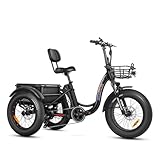

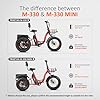

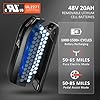

ADDMOTOR TRIKETAN M-330 Electric Trike for Adults, UL2849 Certified, 750W Rear Motor Electric Tricycle, 48V 20Ah 85MI, Fat Tire E-Tike for Seniors with Parking Brake & Differential, Black
$2,599.00 (as of July 6, 2025 18:18 GMT +00:00 - More infoProduct prices and availability are accurate as of the date/time indicated and are subject to change. Any price and availability information displayed on [relevant Amazon Site(s), as applicable] at the time of purchase will apply to the purchase of this product.)![[Ensure Your Ride is Safer with Certified Safety] UL2849 certified for electric trike and UL2271 certified for battery. Experience the assurance of top-tier safety and longevity on all your adventures [Practical Folding Design Combining Convenience,C...](https://m.media-amazon.com/images/I/415tcaYFyGL._SL160_.jpg)




ADDMOTOR CITYTRI E-310 Folding Electric Trike for Adults,UL2849, 750W Rear Motor Electric Trike, 48V 20AH, 90MI, 3-Wheel Electric Bike for Commuting, Cargo 380lbs, Parking Brake,Differential Blue
5% Off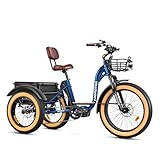


ADDMOTOR Electric Tricycle for Adults, 1000W Mid-Drive Electric Trike, 85MI 48V 20Ah GRANDTAN Turbo Etrike, 450LBS, 160NM Torque, 3 Wheel Electric Bike for Seniors, Parking Brake, Differential Blue
$3,599.00 (as of July 6, 2025 18:18 GMT +00:00 - More infoProduct prices and availability are accurate as of the date/time indicated and are subject to change. Any price and availability information displayed on [relevant Amazon Site(s), as applicable] at the time of purchase will apply to the purchase of this product.)


Tour LITE Electric Tricycle for Adults, 110Miles Full Suspension Etrike, 48V 20AH LG Cells Battery, 20''×4'' Fat Tire Electric Trike, Torque Sensor, Rear Reverse, Speed Differential,550lbs load
$2,299.00 (as of July 6, 2025 18:18 GMT +00:00 - More infoProduct prices and availability are accurate as of the date/time indicated and are subject to change. Any price and availability information displayed on [relevant Amazon Site(s), as applicable] at the time of purchase will apply to the purchase of this product.)![[Ensure Your Ride is Safer with Certified Safety] UL2849 certified for electric trike and UL2271 certified for battery. Experience the assurance of top-tier safety and longevity on all your adventures [1400W Peak Rear-Mounted Motor Provides Enhanced ...](https://m.media-amazon.com/images/I/511Oai5f+yL._SL160_.jpg)


ADDMOTOR CITYTRI E-310 Plus Electric Trike for Adults, Folding Electric Tricycle, 750W Rear Drive 90MI 48V 20AH Etrike for Seniors, 280+80lbs, 3 Wheel Electric Bikes, Ebike Trike, Parking Brake Blue
$1,899.00 (as of July 6, 2025 18:18 GMT +00:00 - More infoProduct prices and availability are accurate as of the date/time indicated and are subject to change. Any price and availability information displayed on [relevant Amazon Site(s), as applicable] at the time of purchase will apply to the purchase of this product.)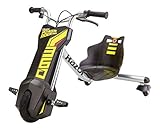




Razor Power Rider 360 9 MPH Drifting Trike Ride-On Electric Powered Tricycle, Black, Yellow
12% Off![[Foldable & Light-Weight]: Designed for urban convenience, Citytan’s foldable frame collapses easily for storage or transport. Whether it’s fitting into a car trunk or a tight garage space, this compact e-trike is ready for city living on the go [Lon...](https://m.media-amazon.com/images/I/412sQ0N9MZL._SL160_.jpg)


ADDMOTOR Citytan Folding Electric Trike for Adults, 65 Miles, 48V 13.5Ah Battery, 20 Mph, 500W Rear-Drive Motor E-Tricycle with Suspension, Differential, Parking Brake System, 20x3.0 Fat Tire, Cyan
$1,399.00 (as of July 6, 2025 18:18 GMT +00:00 - More infoProduct prices and availability are accurate as of the date/time indicated and are subject to change. Any price and availability information displayed on [relevant Amazon Site(s), as applicable] at the time of purchase will apply to the purchase of this product.)


ADDMOTOR HEROTRI M-365X Electric Trike for Adults, 85MI 20Ah Electric Tricycle, 48V 750W Rear Drive Full Suspension Etrike, 20'' Fat Tire 3 Wheel Electric Bike, Parking Brake, Differential, White
$2,799.00 (as of July 6, 2025 18:18 GMT +00:00 - More infoProduct prices and availability are accurate as of the date/time indicated and are subject to change. Any price and availability information displayed on [relevant Amazon Site(s), as applicable] at the time of purchase will apply to the purchase of this product.)![[Certified for Ultimate Safety]: Fully UL2849 certified with a UL2271-certified lithium battery, this Grandtan M-340 electric trike meets top-tier safety standards, giving you confidence and peace of mind with every ride [Long-Range UL2271 Battery]: ...](https://m.media-amazon.com/images/I/41sDXo94W2L._SL160_.jpg)


ADDMOTOR Grandtan II Electric Tricycle for Adults, UL2849 Certified, 750W Rear Drive Motor, 85MI, 48V 20Ah Battery, 3 Wheel Electric Bikes with Suspension & Differential & Parking Brake, Blue
$2,599.00 (as of July 6, 2025 18:18 GMT +00:00 - More infoProduct prices and availability are accurate as of the date/time indicated and are subject to change. Any price and availability information displayed on [relevant Amazon Site(s), as applicable] at the time of purchase will apply to the purchase of this product.)