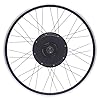
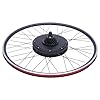
For cycling enthusiasts seeking to electrify their ride without sacrificing the raw experience of pedal-powered biking, the LUGBING Electric Bike Conversion Kit emerges as a compelling solution. This 48V 1000W front-wheel motor system combines robust engineering with intuitive features, offering riders a seamless transition from traditional cycling to enhanced electric-assisted performance. Designed for adaptability and durability, the kit’s components work in harmony to deliver a responsive, customizable riding experience that caters to commuters, recreational riders, and fitness-focused cyclists alike.
Core Performance: Motor and Power Delivery
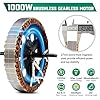
At the heart of this conversion kit lies a 1000W brushless gearless hub motor, engineered for both efficiency and torque. Capable of propelling riders to speeds of 45–55 km/h (28–34 mph), the motor operates with remarkably low noise levels compared to brushed alternatives. Its brushless design eliminates friction-based wear, reducing long-term maintenance needs while ensuring consistent power delivery across varied terrains. Riders frequently highlight the motor’s smooth acceleration, particularly when tackling inclines or navigating stop-and-go urban environments. One user noted, “The instant torque makes uphill climbs feel effortless, yet it never overpowers the natural cycling rhythm.”
The 48V system strikes a balance between energy density and weight, making it suitable for standard bicycle frames without compromising handling. Paired with common 48V lithium-ion battery packs (sold separately), the motor maintains stable voltage output even under heavy load, preventing sudden power drops during extended rides. The absence of gear teeth in the gearless hub further enhances reliability, as there are no internal components prone to stripping or misalignment—a design choice praised by riders who prioritize longevity over incremental weight savings.
Intelligent Control: Dual-Mode Controller and Display Integration
LUGBING’s dual-mode controller represents a significant advancement in conversion kit adaptability. Operating in both Hall effect and sensorless modes, the system automatically switches to non-Hall functionality if a component failure occurs, ensuring uninterrupted operation. This fail-safe mechanism addresses a common concern among e-bike adopters: mid-ride system failures. “It’s reassuring knowing the motor won’t leave me stranded,” commented a rider who regularly commutes in variable weather conditions. The controller’s compatibility with standard PAS (Pedal Assist Sensor) systems allows for seamless integration with existing drivetrains, preserving the bicycle’s original gear ratios while adding electric assist.
The upgraded LCD display provides comprehensive ride data, including real-time speed, total/average speed metrics, trip distance, and battery status. Its sunlight-readable interface enables quick glances without distracting from the road. Cyclists appreciate the customizable PAS levels (1–5), which correspond to distinct power output profiles. A touring enthusiast remarked, “The ability to fine-tune assistance from subtle hill support to full-power cruising lets me match the system to my workout intensity.” The inclusion of a cruise control function—activated by holding the mode button for 2–3 seconds at steady speeds—proves particularly valuable during long-distance rides, reducing thumb fatigue associated with constant throttle input.
Installation and Compatibility Considerations
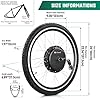
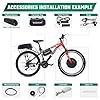
Designed for front-wheel installation on standard 26″ or 28″ bicycles with 100mm dropout spacing, the hub motor requires basic mechanical aptitude for proper mounting. The aluminum alloy construction keeps unsprung weight manageable, though riders upgrading lightweight road bikes may notice slight steering inertia until acclimated. Compatibility with mechanical and hydraulic disc brakes (rotor not included) ensures safe stopping power, while the included torque arm enhances axle stability under high-load scenarios. “The detailed wiring labels made installation straightforward,” noted a DIY-oriented user, though first-time installers are advised to verify spoke tension and wheel truing post-installation.
The PAS sensor merits special attention for its non-invasive design. Mounting between the crank and bottom bracket, it detects pedal cadence without requiring chainline modifications. This implementation preserves the bicycle’s original gearing while enabling proportional assist based on pedaling effort—a feature applauded by purists who want to maintain physical engagement. “It feels like riding with a tailwind that adjusts to my pace,” described a cyclist who regularly alternates between analog and electric-assisted modes.
Real-World Performance Insights
In practical testing across mixed terrain, the 1000W motor demonstrates exceptional versatility. At PAS Level 1, it provides subtle assistance comparable to 250W systems, extending range for fitness-focused rides. Maximum output at Level 5 delivers acceleration comparable to entry-level electric motorcycles, though responsible use of this capability requires awareness of local e-bike regulations. The brushless motor’s thermal management proves competent during sustained climbs, with no noticeable power reduction even after consecutive 15% grade ascents.
Riders consistently praise the system’s responsiveness to pedal input, noting minimal lag between cadence changes and motor response. The torque-based assist feels more organic than speed-based systems, particularly when navigating technical trails or crowded bike lanes. Urban commuters highlight the cruise control’s utility in maintaining consistent speeds through traffic corridors, while touring cyclists value the ability to conserve battery during flat sections without fully disabling assist.
Safety and Maintenance Profile
The aluminum motor housing resists corrosion in wet conditions, though users in coastal regions recommend periodic cleaning to prevent salt accumulation. The waterproof connectors and sealed controller (IP65 rating) provide adequate protection against rain and road spray. While the system lacks regenerative braking, its direct-drive design minimizes mechanical complexity—a trade-off that aligns with the target audience’s preference for reliability over energy recapture features.
Long-term users report minimal maintenance beyond occasional spoke tension checks and controller firmware updates (via USB, when available). The absence of brushes eliminates a common wear component, though periodic inspection of wiring harnesses remains advisable for vibration-prone applications like mountain biking. “After 500 miles, it’s been as reliable as my stock wheelset,” shared a rider using the kit for daily commutes.
User Experience Enhancements
Subtle design choices elevate the overall user experience. The backlit display maintains visibility during night rides without causing glare, while its intuitive button layout allows adjustments without removing gloves. The inclusion of a battery level indicator with voltage readout helps riders anticipate range more accurately than basic LED systems. Multiple users emphasized the value of the PAS’s proportional assist in reducing joint strain during long rides: “It doesn’t replace pedaling—it amplifies my effort, letting me ride farther without knee pain.”
The kit’s compatibility with aftermarket throttles (sold separately) adds customization potential, though most riders find the PAS system sufficiently responsive for general use. Anecdotal reports suggest the motor’s efficiency improves when paired with high-discharge 48V batteries, though the system remains functional with standard packs, making it accessible to riders at different budget tiers.
Comparative Advantages
When juxtaposed with mid-drive conversion kits, this front-wheel system offers distinct advantages in installation simplicity and cost efficiency. The hub motor’s independence from the drivetrain allows preservation of existing gear systems—a critical factor for cyclists with premium derailleurs or internally geared hubs. Conversely, riders prioritizing weight distribution may prefer rear-wheel or mid-drive configurations, though the LUGBING kit’s balanced design mitigates front-heavy handling quirks common to entry-level hub motors.
The dual-mode controller’s redundancy sets it apart from single-mode competitors, particularly for riders in regions with limited technical support. By maintaining functionality even during partial system failures, it reduces downtime and repair costs—a practical consideration for daily commuters. Environmental testing indicates reliable operation in temperatures from -10°C to 50°C (14°F to 122°F), supported by multiple riders in extreme climates: “It handled desert heat and mountain cold snaps without hiccups.”
Conclusion
LUGBING’s 48V 1000W conversion kit successfully bridges the gap between traditional cycling and electric mobility. Its robust motor performance, adaptive controller logic, and user-centric interface cater to riders seeking to enhance their bicycles without compromising mechanical simplicity. While not without the inherent trade-offs of front-wheel drive systems, the kit’s thoughtful engineering and reliability-focused design make it a standout option in the conversion market. For cyclists prioritizing customizable assist, low maintenance, and seamless integration with existing frames, this system delivers a compelling blend of power and practicality that respects the cycling experience while expanding its possibilities.
ASIN: B0C9MN1TZL


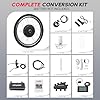

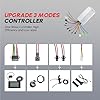
PEXMOR Electric Bike Conversion Kit, 48V 1000W 26" Front Wheel E-Bike Hub Motor Kit, Upgrade 3 Mode Controller w/PAS/LCD Display/Twist Throttle Ebike Bicycle Wheel Kit
$174.99 (as of July 11, 2025 02:33 GMT +00:00 - More infoProduct prices and availability are accurate as of the date/time indicated and are subject to change. Any price and availability information displayed on [relevant Amazon Site(s), as applicable] at the time of purchase will apply to the purchase of this product.)![[Powerful Brushless Motor]: Electric Bike Conversion Kit features 48V 1000W brushless and gearless hub motor for efficient and noiseless running; can easily convert your bicycle to electric bike and reach the maximum riding speed of 45 KM/H( 27.95 mi...](https://m.media-amazon.com/images/I/615FaI48SUL._SL160_.jpg)


AW Electric Bicycle Motor Kit 48V 1000W 26" Front Wheel E-Bike Conversion Kit, E-Bike Hub Set with Dual Mode Controller
$249.90 (as of July 12, 2025 06:02 GMT +00:00 - More infoProduct prices and availability are accurate as of the date/time indicated and are subject to change. Any price and availability information displayed on [relevant Amazon Site(s), as applicable] at the time of purchase will apply to the purchase of this product.)

Voilamart 48V 1000W Electric Bicycle Conversion Kit 26IN Ebike 100mm Front Hub Motor Wheel Conversion Kit for Turn Pedal Bicycle Into Ebike (26IN Front Wheel + 13Ah Battery)
$428.89 (as of July 12, 2025 06:02 GMT +00:00 - More infoProduct prices and availability are accurate as of the date/time indicated and are subject to change. Any price and availability information displayed on [relevant Amazon Site(s), as applicable] at the time of purchase will apply to the purchase of this product.)



20 Inch Electric Bike Conversion Kit, 1000W 48V Front/Rear Wheel Electric Bicycle Motor Wheel Kit High Speed Brushless Gearless Ebike Hub Motor Kit with Tire (Front)
$109.99 (as of July 12, 2025 06:02 GMT +00:00 - More infoProduct prices and availability are accurate as of the date/time indicated and are subject to change. Any price and availability information displayed on [relevant Amazon Site(s), as applicable] at the time of purchase will apply to the purchase of this product.)


20" Front Wheel Hub Electric Bike Conversion Kit, 48V 1000W E-Bike Hub Motor Kit, Upgrade Controller Brushless Motor Ebike Bicycle Wheel Assembly Kit with PAS/LED Display/Thumb Throttle
$144.99 (as of July 12, 2025 06:02 GMT +00:00 - More infoProduct prices and availability are accurate as of the date/time indicated and are subject to change. Any price and availability information displayed on [relevant Amazon Site(s), as applicable] at the time of purchase will apply to the purchase of this product.)


Ktaxon Electric Bike Conversion Kit, 48V 1000W Ebike Conversion Kit, 26" Front/Rear Wheel E-Bike Conversion Kits with PAS, LCD Display, Aluminum Alloy Frame and Gearless Hub Motor (Front Wheel)
6% Off


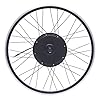
DOONARCES700C 48V 1000W Electric Bicycle Conversion Kit LCD Front Wheel Motor Conversion Kit with Display for 28'' 29'' 700C Front Wheel Bicycle, for V/Disc Brake (Front Wheel)
$177.99 (as of July 5, 2025 13:30 GMT +00:00 - More infoProduct prices and availability are accurate as of the date/time indicated and are subject to change. Any price and availability information displayed on [relevant Amazon Site(s), as applicable] at the time of purchase will apply to the purchase of this product.)

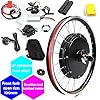


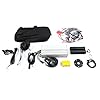
20" Front Wheel Hub Electric Bike Conversion Kit, 48V 1000W E-Bike Powerful Hub Motor Kit with SW-810LED Display Waterproof Wire Front Wheel Hub Assembly Motor Kit (US Stock)
$199.99 (as of July 11, 2025 10:26 GMT +00:00 - More infoProduct prices and availability are accurate as of the date/time indicated and are subject to change. Any price and availability information displayed on [relevant Amazon Site(s), as applicable] at the time of purchase will apply to the purchase of this product.)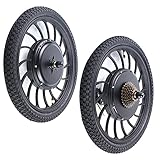



MuChaIOAK Waterproof Ebike Conversion Kit, 20"" Front/Rear Wheel Conversion Kit 48V 1000W Electric Bicycle Hub Motor Kit Brushless Gearless Motor Kit, Fast Start (Front), Black
$99.99 (as of July 12, 2025 06:02 GMT +00:00 - More infoProduct prices and availability are accurate as of the date/time indicated and are subject to change. Any price and availability information displayed on [relevant Amazon Site(s), as applicable] at the time of purchase will apply to the purchase of this product.)